
Studying in Poland for foreigners: where to start
Poland has been one of the most popular study destinations in Central Europe for several years. Key factors for many candidates are the affordable cost of living, the wide range of programs in Polish and English, and the growing number of universities in Poland cooperating internationally. At the same time, recruitment may differ from the procedures familiar to your country: different deadlines, a different set of documents and separate rules for non-EU candidates.
In this guide we show you recruitment 2026 Step by step: how to choose a university, how to apply for college, what are the typical requirements for foreigners and where the most common mistakes occur. The text is prepared for candidates for bachelor's and master's degrees, as well as for those who plan to come to Poland for a longer period of time.
💡 Tip
Start completing documents as early as winter. Certified translations and legalization (apostille) can take several weeks, and recruitment deadlines are immovable.
Choosing a major and university in Poland
The first step is to choose a program and mode: full-time or part-time, in Polish or English. There are also differences in enrollment based on the level of study. For a bachelor's degree, a high school diploma counts, and for a second degree a bachelor's or engineer's degree. With regulated majors (such as medicine) you are more likely to encounter additional requirements, such as an interview or test.
When selecting a university, compare: required language level, fees (tuition and enrollment fees), document recognition rules and support for international students. It's also worth checking whether the university assists with residence formalities. If you are also considering organizational issues upon arrival, the service's guidance pages can be useful, such as. guide for foreigners As well as a practical text on choosing an apartment: dormitory or rental.
Program in English or in Polish
Programs in English usually have clear language requirements (certificate or interview). Programs in Polish may require proof of language proficiency or completion of a preparatory course. In the 2026 recruitment, it will be important for you to check the required level (e.g. B1/B2) and the form of confirmation, as universities use different lists of accepted certificates.
Recruitment 2026 step by step
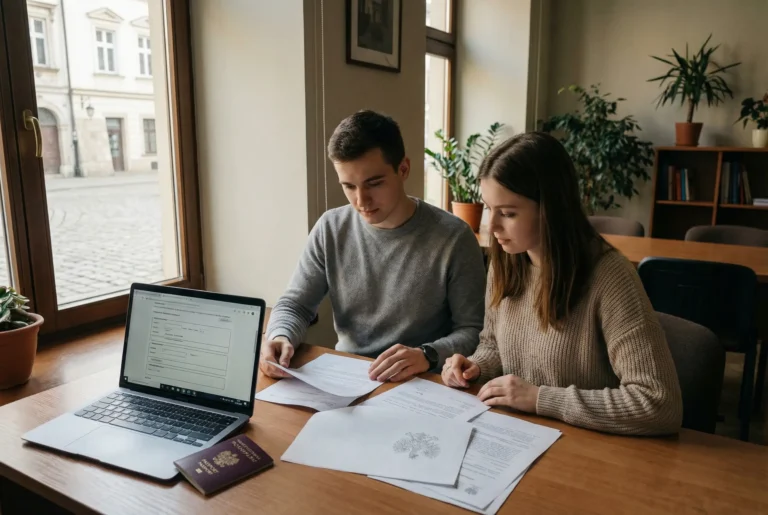
Although the details vary between universities, the scheme is similar. First, you create an account in the enrollment system, choose a major and pay the enrollment fee. Then you fill in your data and upload scans of documents. Finally, you get a decision and complete the originals for review or mailing. From the candidate's point of view, the most important thing is to watch the deadlines and consistency of data in the documents.
If you ask specifically, how to apply for college, treat it like a project with a checklist: (1) choosing a program, (2) confirming requirements, (3) preparing documents, (4) applying, (5) confirming the venue, (6) preparing arrival. Many people put off this process until the last minute, and then run into problems with translations or formal deficiencies.
💡 Tip
Before sending your application, check the transliteration of your name. The most common mistake is different spellings in your passport, diploma and in the recruitment system.
Requirements for foreigners and documents
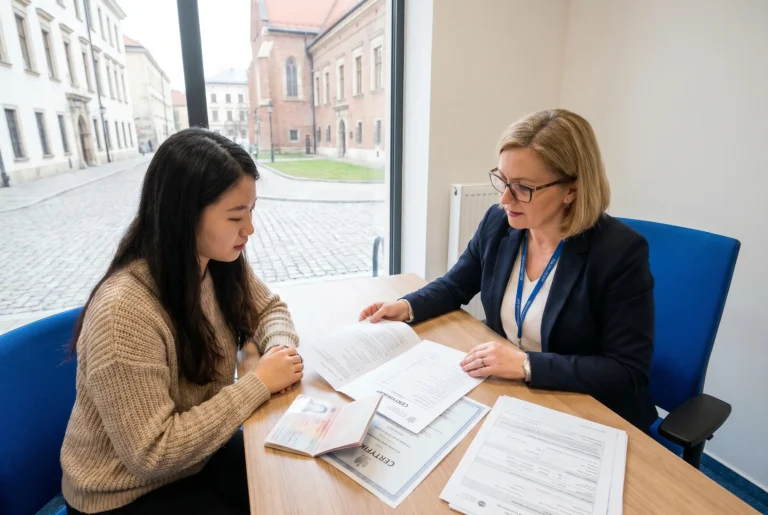
Requirements for foreigners most often include: a document authorizing study at a particular level, proof of identity, a photo, proof of language proficiency and a set of translations. Some universities also ask for a performance certificate or supplement, and sometimes a description of the grade scale. Remember that some documents require legalization or apostille, depending on the country of issue.
It's also a good idea to plan your stay paperwork. If you need a visa or residence card, check the requirements well in advance. A good starting point is the department: residence card and visa. When applying for a visa, the topic of insurance often comes up, as we discuss in more detail in the guide: invitation insurance.
List of most frequently required documents
After admission: arrival, health and paperwork
Once you've received the decision and confirmed your place at the university, it's usually time for the most practical topics: accommodation, registration, phone number, bank account and organizing your first weeks at the university. It's also worth checking out how health care works in Poland. For many foreign students, it is crucial to understand the difference between National Health Insurance and private insurance, and the cost of private treatment.
The most common problems and how to avoid them
In practice, the most stress is caused not so much by the studies themselves, but by deadlines and paperwork. If the 2026 enrollment is your first application to a foreign university, plan to reserve time for revisions. Universities may ask for additional clarification or resubmission of scans. It's also a good idea to determine whether you will pick up your documents in person, or whether you can send them by mail or courier.
Summary: How to apply for college in 2026
Study in Poland for foreigners are a viable and increasingly easy choice, but require good preparation. The most important elements are: choosing a program, matching the university to your language capabilities, a set of documents (with translations and possible legalization) and keeping an eye on deadlines in the recruitment system. If you approach it methodically, recruitment 2026 will simply be a series of clear steps.
If you are in the process of planning your arrival, also check out the residence and health guides at student-insurance.co.uk. This will make it easier for you to plan your paperwork and first weeks after arrival. The earlier you start, the less stress you'll have in July and August.





 Polish
 English
 Ukrainian
 Turkish
 Russian
 Indonesian
 Vietnamese
 Spanish