
Residence Card This is a document confirming a foreign national’s legal residence in Poland based on an issued permit. If you’re wondering how long it takes to receive a residence card, the answer is: it depends on the provincial office, the completeness of the application, and the office’s caseload. In practice, the waiting time is often longer than the statutory deadlines. In this article, we explain the procedure, how to check the status of your application, where to find the online status of your residence card, and what to do if the process takes too long.
What is a residence card?
A residence card is a plastic document issued to a foreign national who has been granted a temporary residence permit, a permanent residence permit, or an EU long-term resident status in Poland. The card itself does not replace the administrative decision, but it confirms the holder’s identity and right to reside in Poland during its period of validity. For many people, it is also necessary for travel, employment, renting an apartment, and handling official matters.
When considering the question of how long it takes to receive a residence card, it’s important to distinguish between two stages. First, the provincial office conducts the proceedings and issues a decision. Only then does the card get personalized and ready for pickup. This means that the provincial office may calculate the waiting time separately for the decision and separately for the document itself. If you’re just starting to prepare the paperwork, you may find the following resources helpful: studying in Poland for foreigners and about the residence permits available on the website.
💡 Tip
Keep your application submission confirmation, case number, and login information for the government agency's system. You'll usually need this information when you want to check the status of your application online or by phone.
How long does it take to get a decision?
By law, applications for temporary residence should be processed without undue delay, and more complex cases within a few months. In practice, however, the processing times for temporary residence can be longer. At many provincial offices, the wait ranges from several months to even over a year. The province, the number of applications filed, and whether the office requests additional documentation all play a significant role.
If you type “residence card waiting time” into a search engine, keep in mind that there is no single nationwide figure. The waiting time is actually determined by the provincial office based on the workload of the specific department handling foreign nationals’ affairs. People submitting applications in large university towns usually have to wait longer. After a positive decision is issued, you still have to wait for the card to be produced, which usually takes a few more weeks.
The length of the process also depends on whether you have valid health insurance and a complete set of supporting documents. It’s a good idea to check in advance what rules are outlined in the article about health insurance for students, because the lack of required documents often leads to requests for additional information and further delays.
How do I check the status of a case?
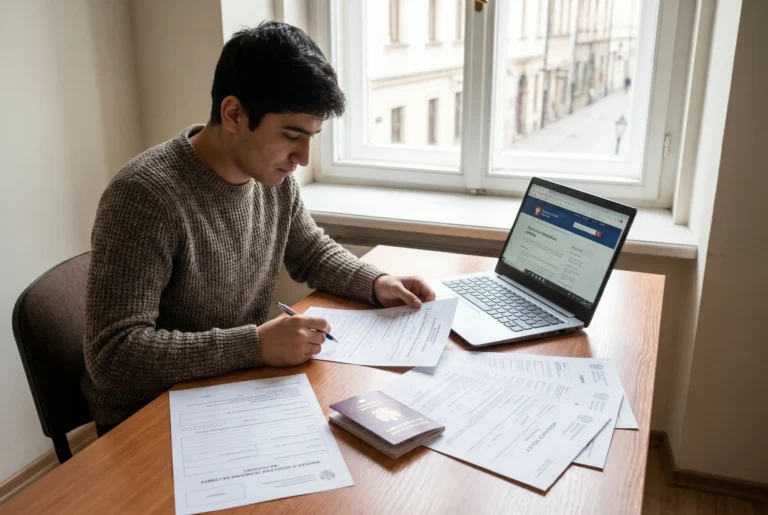
There are usually three ways to check the status of an application: through the office’s online system, by phone, or by email. Not every office offers the same services, so first check the website of the relevant provincial office. There you’ll usually find tabs such as “residence card status online,” “case tracking,” or “services for foreign nationals.”.
To check the status of your application, you’ll usually need your case number, passport number, or a special code assigned after you submitted your application. The system messages are often brief, such as: “Application accepted,” “Formal review in progress,” “Awaiting additional information,” “Decision ready,” or “Card ready for pickup.” It’s a good idea to take screenshots and check your account regularly, especially after receiving a letter from the office.
If you don't see any changes in the system, please use the contact information provided by the department contact or directly through the office's hotline. Sometimes the online status of a residence card is updated with a delay, and the actual stage of the process has already changed.
Where should you look for information most often?
💡 Important
An "online" status does not always mean that the decision has already been served. In administrative matters, what counts is the content of the document and the date of effective service, not just a message in the system.
What is causing the delay in the proceedings?
The most common cause of delays is procedural deficiencies. These include a missing signature, incomplete attachments, improper photos, a lack of proof of payment, or outdated insurance. The process is also prolonged by the need to submit additional documents regarding education, employment, place of residence, or source of income. Each official request halts the progress of the case until a response is provided.
Seasonality also plays a role. More applications are submitted to government offices before the start of the academic year and after summer break. That’s when questions about waiting times at the provincial office come up most often. It’s also worth remembering that changing your address without notifying the office can lead to problems receiving mail and further delays.
It’s a good idea to prepare all your documents before your visit and to check whether you have an insurance policy that’s accepted for residency matters. You’ll find useful information on the homepage KL insurance and in guides on the costs and treatment of foreign nationals in Poland.
Frequently asked questions
How long does it actually take to get a residence card?
The actual waiting time depends on the provincial office and the type of case. In practice, many people wait several months, and at busier offices, even longer than a year. After the decision is made, you still have to wait for the card itself to be issued.
How do I check the status of my application?
You can usually check the status of your application through the agency’s website, by phone, or by email. Most often, you’ll need your case number, passport number, or the code you received after submitting your documents. It’s best to use the official website of the relevant provincial office.
Is the online residence status card always up to date?
Not always. The online system may display data with a delay, so it’s a good idea to compare it with correspondence from the office. If the status doesn’t change, it’s best to contact the office directly or check site map and official information pages.
What should you do if a government agency takes a long time to respond?
First, check to see if the agency has sent a request for additional documents. Then, contact the Department of Foreigners’ Affairs and ask for an update on the current status of your case. In cases that are taking a long time, you may want to consider sending a reminder, preferably after reviewing your legal situation.
Which documents most often cause delays in a case?
The most common issues are failure to pay the fee, inappropriate photos, failure to confirm the purpose of the stay, incomplete insurance coverage, and lack of documents proving financial means. Even a minor procedural error can extend the processing time by weeks or months.
Is it legal to stay in Poland while waiting?
In many cases, yes, provided the application was submitted correctly and on time. However, the legality of your stay depends on the specific grounds for your application and the date the documents were submitted. Therefore, it is always a good idea to keep the receipt confirming that your application was accepted and to keep track of all correspondence.
Summary
If you’re wondering how long it takes to get a residence card, the most honest answer is: anywhere from a few months to much longer, depending on the office and how complete your documents are. The best way to stay on top of things is to check the status of your application regularly, keep an eye on your mail, and respond promptly to any requests. Before submitting your documents, also make sure you have the correct attachments, a valid mailing address, and valid insurance. This is a simple way to minimize the risk of delays and receive your residence card faster.







 Polish
 English
 Ukrainian
 Turkish
 Russian
 Indonesian
 Vietnamese
 Spanish