
Invitation to Poland vs. insurance
An invitation to Poland can make formal matters easier: it shows the purpose and conditions of the stay, helps when applying for a visa or during an interview at the consulate. In practice, however, many people ask for something else: invitation to Poland insurance - Whether it is at all related and whether the policy is mandatory.
The answer is that an invitation is not a substitute for insurance. Depending on citizenship, type of visa and planned length of stay, whether insurance is needed It can mean „required for a visa,” „required at the border,” or „strongly recommended, because without it you risk high medical costs.” Below, I explain the difference between an invitation and a visa, when a foreigner's health policy is necessary, and how to match it with realistic requirements for entry.
Visa vs. invitation: what an invitation gets you
The most common misunderstanding is about relationships visa vs invitation. These are two different documents. An invitation is usually a statement by a person or institution in Poland that it will accept a foreigner and will often provide accommodation or support during their stay. A visa (or visa-free entitlement), on the other hand, is a decision authorizing entry and stay for a specific purpose and time.
The invitation can help demonstrate the purpose of the trip and the conditions of stay. However, it does not address key issues such as required health insurance, financial resources or travel documents. Therefore, even with an invitation, a visa application can be supplemented with a policy, and at the border an officer may ask for proof of insurance.
💡 Tip
If you are inviting someone to Poland, ask them to have the policy in PDF form and a printout. When talking at the consulate and at border control, being able to show the document quickly is important.
Is insurance needed for entry
In the context of entry requirements It is worth thinking about two stages: (1) obtaining a visa (if required) and (2) border control. At both stages, insurance may appear as part of the verification, even when one has an invitation.
Practical: For many non-EU foreigners, a medical policy is a standard part of visa documentation. The insurance is supposed to cover medical expenses and possible assistance benefits. Insurers' materials and products targeting foreigners often emphasize that the insurance meets the requirements of the Foreigners Act and can be used as a basis for applying for a visa.
Even when someone enters without a visa (e.g., in visa-free travel), having insurance is not always a literal condition of entry, but it is sometimes important in assessing whether a person is prepared to stay and will not burden the system. In addition, it's a real financial protection, as medical costs privately can be high. In practice, it's a good idea to supplement your knowledge of prices at treatment costs in Poland.
When an invitation is not enough
The invitation may indicate that the host provides lodging or subsistence. However, this does not mean that it covers the cost of treatment. Treatment in Poland, especially in the private sector, may require payment in advance. Without a policy, a foreigner usually pays on his own, and only then possibly recovers from insurance (if he has one). Products dedicated to foreigners also often emphasize the possibility of cashless organization of benefits By the assistance center throughout Poland.
Foreigner's health policy: what it should cover
Foreigner's health policy It should answer two purposes: to meet formal requirements (visa, stay, residence card) and to act realistically in case of illness or accident. In the general terms and conditions of insurance, you will meet the typical elements: outpatient treatment costs, hospital treatment and surgery, as well as assistance services organized by the emergency center.
In the T&C documents for foreigners' medical expenses insurance, you can find an indication that the organization and payment of treatment is carried out by the emergency center, and coverage includes, among other things, the costs of hospital treatment and surgery, if medically necessary. Also important are exclusions of liability, such as sanatorium treatment, improvement treatment or certain dental benefits, and sometimes alcohol events.
Two common mistakes when choosing a policy
First mistake is the wrong territorial coverage. Some travel policies operate „abroad” and exclude Poland or the country of permanent residence. If a foreigner is to be insured for the duration of his stay in Poland, he needs a product that covers medical benefits just in Poland.
Second mistake is the failure to match the duration of protection to the stay. If the visa is for 90 days and the policy is for 30 days, there is a gap. For stays longer than tourist, it's also worth checking options that connect to later formalities, such as the residency card thread. For more resources in this area, see Residence card and visa.
💡 Tip
If a foreigner is planning to study, compare NFZ and KL policy. For many people, a policy is faster to start, and NFZ is sometimes a later stage.
If your goal is a typical medical expense policy for your stay in Poland, start with the page KL insurance.
Checklist: documents and requirements
If you are organizing the arrival of a loved one or inviting a guest, consider the following list as a quick summary. It includes typical entry requirements, which appear in practice at visas, at the border and at the first formalities in Poland.
If you want to prepare a foreigner practically for his stay, it is also worth discussing „post-arrival” issues, such as how the following works prescription in Poland for a foreigner. This often helps to avoid stress at the first infection or doctor's visit.
Summary: Is it necessary to have a policy
Invitation to Poland and insurance are not the same thing. An invitation reinforces the credibility of the purpose of the stay, but it does not give health coverage and does not replace the documents required for the visa procedure. If you ask, whether insurance is needed, the answer depends on the situation: for many visa applications, the policy is a standard element, and for entry and stay it is a practical protection against high medical costs.
The safest way is to select foreigner's health insurance policy with the right territorial coverage (Poland/Schengen), for the entire duration of your stay and with clear terms and conditions for the use of assistance. If you need help with selection, start with the product information at KL insurance and match it to the purpose: tourism, study, work or longer stay.



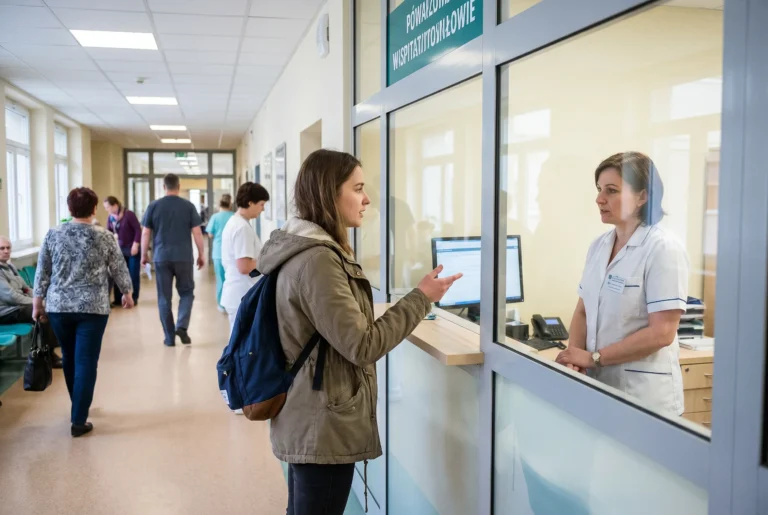




 Polish
 English
 Ukrainian
 Turkish
 Russian
 Indonesian
 Vietnamese
 Spanish