
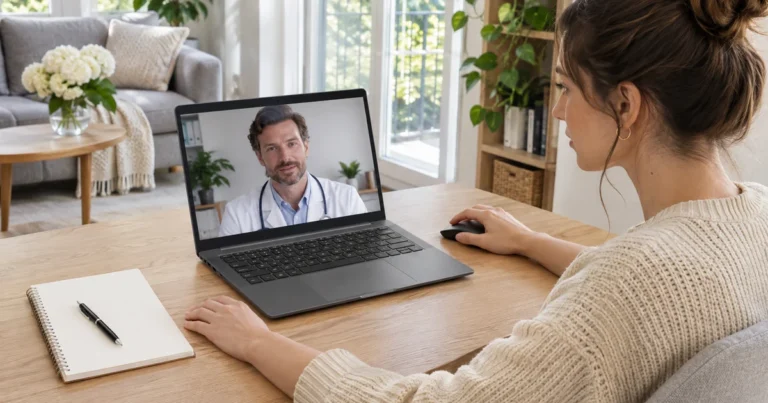
Telemedicine Consultation for Foreign Nationals This is a remote medical consultation with a doctor by phone or online, also available while you’re in Poland. For many people from abroad, this is the fastest way to discuss symptoms, get recommendations, and, in some cases, also receive an e-prescription or a referral. In this article, we explain how to schedule a teleconsultation in Poland, what information to have ready, when a medical consultation in English is available, and how Poland’s e-health system works from a foreigner’s perspective. We also highlight the differences between private, insurance-based, and public healthcare and offer tips on how to avoid the most common issues when registering for the first time.
What is telemedicine in Poland?
In Poland, a telemedicine consultation is a medical consultation conducted remotely, most often by phone, video call, or through a form in the healthcare facility’s system. It may address basic symptoms, follow-up care, discussion of test results, or the issuance of electronic documents. For a foreigner, this means convenient access to a doctor without having to travel to a clinic.
In practice, online doctor visits in Poland may be available through several models: privately, as part of a health care package, or through insurance-related services. Some insurance products include telemedicine, e-consultations, and e-prescriptions, and sometimes a medical hotline as well. However, not every situation is suitable for remote care. If symptoms are sudden, severe, or life-threatening, you should call the emergency number 112 or go to an in-person medical facility.
If you want to better understand the Polish benefits system, you may also find this article on health insurance for students.
💡 Tip
Teleconsultations are effective for infections, extended treatment, reviewing test results, and initial assessments of a problem. They do not replace a physical examination when urgent diagnosis is needed.
How to Schedule an Appointment, Step by Step?
If you’re searching online for “how to schedule a telemedicine appointment,” the easiest way to start is by figuring out which healthcare channel you can use. First, determine whether you have private insurance, a health plan through your university or employer, or if you’re using a private facility. This will determine the registration process, the language of service, and the cost of the visit.
The procedure is usually similar. You go to the clinic’s or medical partner’s website, create an account, and provide your identification information. For insurance solutions, you may be required to provide your policy number, PESEL number, or the ID number specified when you signed the contract. Next, you select a specialty, appointment date, and contact method. Some systems allow you to register via a hotline, while others let you do so through an app or patient portal.
After the consultation, the doctor may provide recommendations, a sick note, information about further diagnostic tests, or an e-prescription. It’s also a good idea to read the article about e-prescription for a foreigner, because this stage often raises the most questions.
What information should you prepare before the interview?
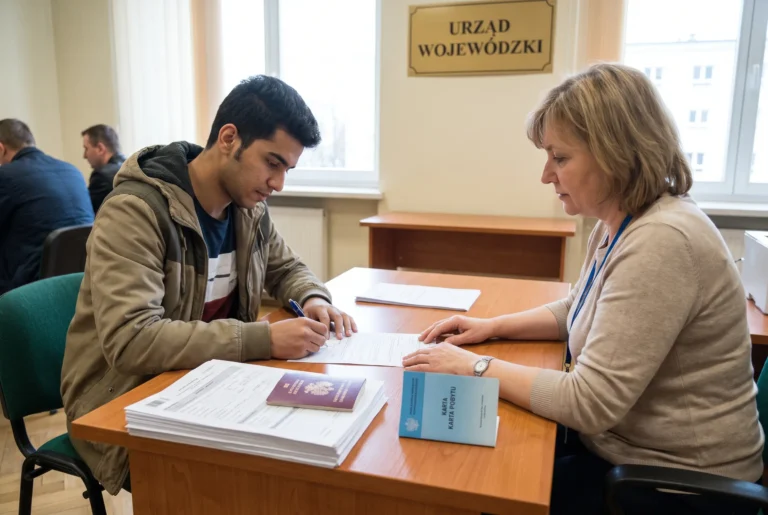
Before a telemedicine consultation, a foreign national should have their basic identification and health information ready. The most commonly required information includes first and last name, date of birth, phone number, email address, and PESEL number, if assigned. If you do not have a PESEL number, the facility may ask for your passport number or another form of identification. This procedure is also followed by medical partners that provide services to foreign nationals.
Also, prepare a list of your symptoms, including how long they’ve lasted, what medications you’re currently taking, and whether you have any allergies. If you have previous test results, medical records, or photos of prescriptions, have them on hand. Some platforms allow you to upload your medical records before the consultation. This shortens the consultation and makes it easier for the doctor to make a decision.
When it comes to e-health in Poland, it’s important to remember that you may need access to your Online Patient Account to use e-prescriptions. In some telemedicine models, patients receive a prescription code via text message or email. Sometimes, you’ll need to verify your phone number and email address in advance. If you have health insurance, be sure to check the coverage details on the website treatment costs in Poland, to find out if the teleconsultation is included in the plan.
💡 Good practice
Write down your symptoms in English and Polish. If the doctor or receptionist switches the language of the conversation, you’ll be able to describe your problem more easily, without stress or misunderstandings.
Where can I find help in English?
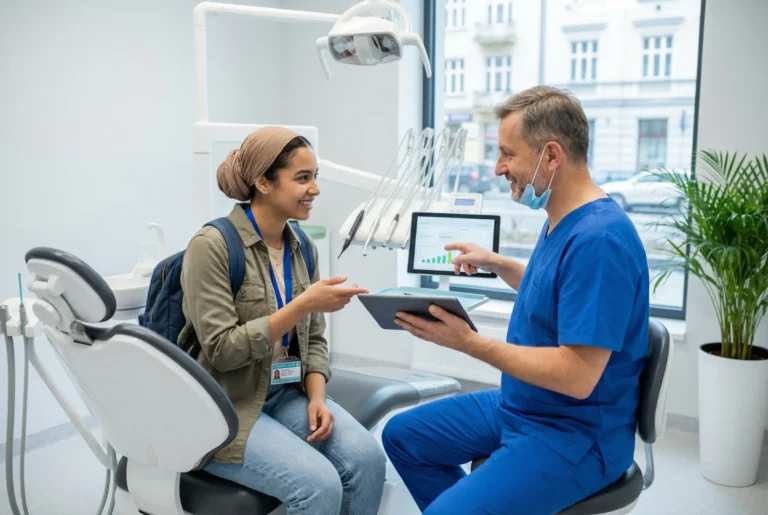
Medical consultations in English are mainly available at private medical centers, clinics that serve expats, and on some telemedicine platforms. When making an appointment, it’s a good idea to specify your preferred language right away or ask if the doctor conducts consultations in English. Don’t assume that every facility automatically offers multilingual services.
In large cities, access is usually better than in smaller towns. Foreigners often use telemedicine because it’s easier to find an available appointment and an English-speaking specialist. This is especially important when you need quick advice regarding infections, allergies, dermatology, or stomach problems. Some insurance plans also include a medical hotline and cover teleconsultations up to a certain limit.
If you're just starting to plan your stay and health insurance, check out our offerings KL insurance and guides in the section Health and treatment. This will make it easier for you to determine whether the policy or plan you’ve chosen provides actual access to remote medical care.
Frequently asked questions
Can a foreigner use telemedicine services in Poland without a PESEL number?
Yes, this is possible at many facilities. Instead of a PESEL number, registration can be done using a passport number or another form of identification. The rules depend on the system used by the specific clinic or healthcare provider.
How do I schedule a teleconsultation if I don't speak Polish?
It’s best to look right away for facilities that offer medical consultations in English. When you make an appointment, specify the language for your visit, or contact the hotline and ask for an English-speaking doctor. In large cities and on online platforms, such appointments are usually more readily available.
Can you get an e-prescription during a telemedicine consultation?
Yes, if the doctor deems it medically necessary. After a telemedicine consultation, an e-prescription can be sent via text message or email, and it’s a good idea to check the patient’s system beforehand to see if it has been filled. For more information, see the guide on The Implementation of E-Prescriptions in Poland.
How much does an online doctor's visit cost in Poland?
The cost depends on the facility, specialty, and scope of services. A private appointment is usually billed separately, but it may already be included in a medical plan or insurance coverage. Always check the terms and conditions and the scope of coverage before making an appointment.
Is a telemedicine consultation sufficient for every health issue?
No. Telemedicine is suitable for many common conditions, but it does not replace a physical examination in every case. In cases of severe pain, shortness of breath, injury, or a sudden deterioration in health, you may need in-person care or emergency medical assistance.
Do I need health insurance to use telemedicine?
Not necessarily, since you can schedule a private appointment. However, insurance or a medical plan reduces the cost and often simplifies access to the registration platform. For international students, this is usually the most convenient option.
How does e-Health Poland work for foreign nationals?
E-Health Poland includes, among other things, e-prescriptions, electronic communication with healthcare facilities, and select patient account services. The extent of your practical access depends on whether you have the appropriate identification information, an active phone number, and an account in the relevant system. For some of these services, you must first verify your contact information.
Summary
Teleconsultation for foreigners in Poland is a convenient way to quickly contact a doctor, especially if you need advice in English or aren’t sure where to start with treatment. The most important thing is to determine which platform you’re using, have your ID ready, and check the rules for e-prescriptions. If you’re planning a longer stay, make sure you have appropriate health insurance or a medical plan. This will make your online visit with a doctor in Poland simpler, faster, and less stressful.





 Polish
 English
 Ukrainian
 Turkish
 Russian
 Indonesian
 Vietnamese
 Spanish